
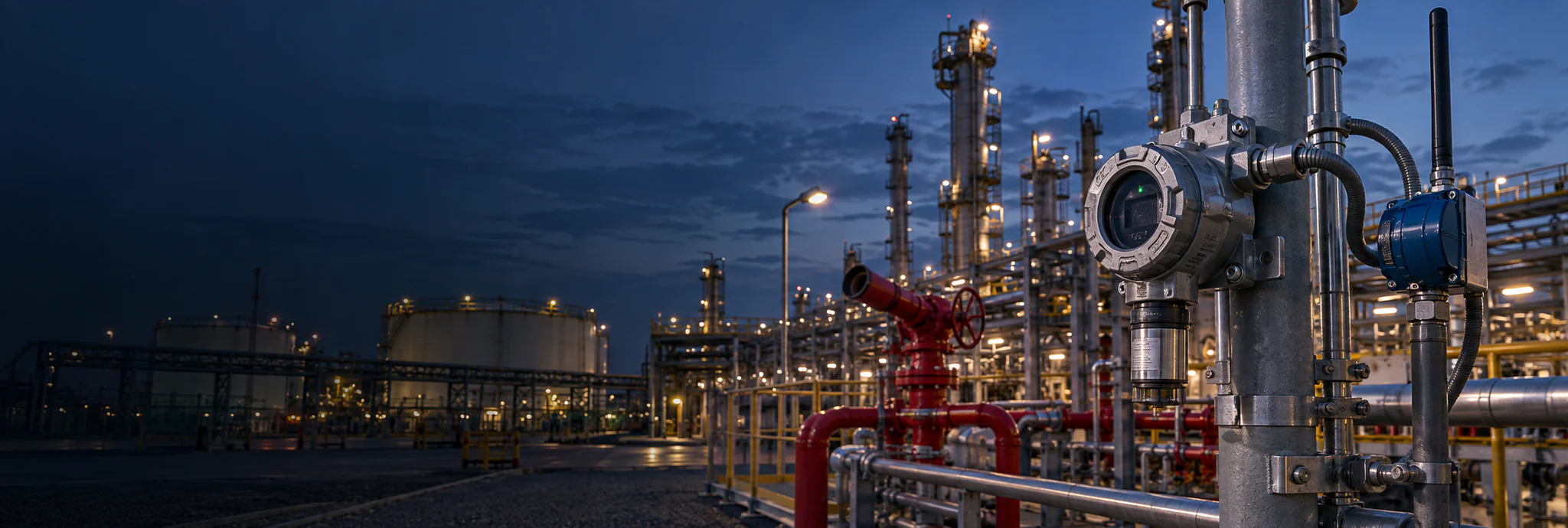
Fire & Gas Mapping Services
Geographic physical monitoring optimization loops and layout coverage design studies.
Improper placement of fire and gas instrumentation leaves facilities open to catastrophic unmonitored accumulation risks. East Wind leverages advanced Computational Fluid Dynamics (CFD) gas dispersion models alongside 3D geometric ray-tracing algorithms to calculate exact target line-of-sight metrics. We maximize first-hit detection probabilities while streamlining total device count requirements to protect production spaces cost-effectively.
CFD Gas Dispersion Simulation
Simulating realistic toxic and combustible releases factoring in complex structure geometry, wind vectors, and local ventilation blocks to detect vulnerability blind spots missed by traditional rule-of-thumb models.
3D Geometric Ray-Tracing
Running exhaustive mathematical line-of-sight studies to optimize optical flame sensor and open-path infrared beam coverage margins, guaranteeing compliance with modern performance standards.
Sensing Technology Selection Audits
Independent assessment of catalytic bead, infrared point, open-path UVIR, electrochemical, and acoustic gas detection technologies for each specific gas group, ambient condition, and process scenario.
Fire Detection Zone Mapping
Calculating compliant heat, smoke, and linear thermal cable placement layout parameters using international codes paired with smoke movement simulations for complex processing facilities.
- CFD dispersion simulation analysis files and hazard risk contour charts
- Optimized 3D sensor coverage graphics with coordinate engineering parameters
- Comprehensive detector installation schedule including sensor type selections
- Cause-and-effect control loop logic logic matrices for F&G logic panel setups
- Physical field validation inspection and commissioning protocol forms
- System lifecycle calibration frequency and upkeep schedule roadmaps
Contact Our Team
Planning a new safety system, digitalization initiative, equipment package, or site upgrade? Speak with our engineering team to review your application, operating conditions, technical requirements, and project scope.